
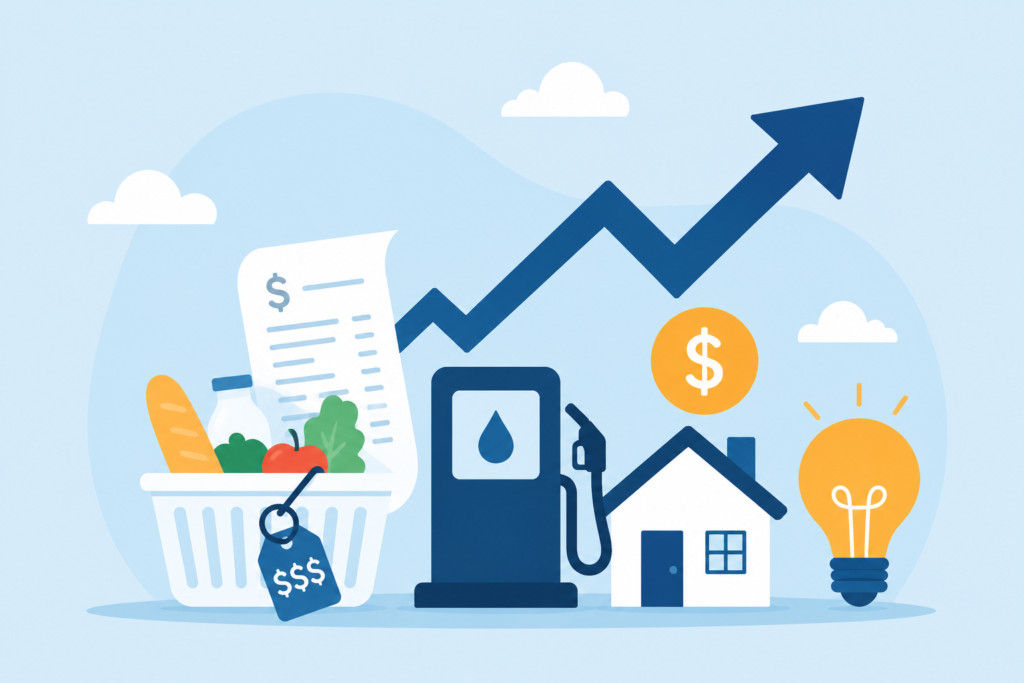
The cost-of-living squeeze is eroding consumers’ purchasing power and forcing small businesses to be far more deliberate, targeted and strategic with every marketing dollar they spend.
Cost of living and small business reality
Australian households are under sustained pressure from rising prices, with inflation and higher interest rates pushing many to cut back on non-essential spending. For small businesses, that translates into softer demand, tighter margins and far less room for “spray and pray” marketing that doesn’t clearly move the needle.
Surveys of Australian SMEs show more than half are worried about slowing customer demand due to cost-of-living pressures, and many expect little or no sales growth without changes to their strategy. At the same time, operational costs—from rent and utilities to insurance and logistics—have climbed, which means marketing budgets are often the first to be trimmed if they’re not clearly linked to revenue.
Reduced purchasing power: what it actually means for marketing
Cost-of-living pressure doesn’t just reduce how much people spend; it changes how they spend. Consumers become more price-sensitive, compare more options, delay non-essential purchases and focus on value and trust, which raises the bar for small business marketing.
Research shows younger and mortgaged households are cutting both essential and discretionary spend, while older, wealthier segments have maintained or increased spending. If your marketing still targets broad, generic audiences, you risk talking loudly to the groups whose wallets are shrinking, while ignoring those segments that still have money to spend and are willing to support small businesses they value.
Why “more targeted” is now non-negotiable
In this environment, every impression, click and conversation has to work harder. Small businesses are increasingly worried about customer acquisition, and many are responding by doubling down on channels that allow precise targeting and measurable outcomes, particularly social and search (SEM).
Being more targeted means:
- Identifying the customer segments whose purchasing power and propensity to buy are highest for your category, not just the “usual” demographic bands.
- Focusing your creative and messaging on the specific problems, motivations and moments that actually trigger a purchase for those segments.
- Prioritising channels where you can refine audiences over time—search, social, email and retargeting, rather than broad untargeted spend.
Strategic positioning: value without racing to the bottom
As costs rise, many small businesses feel pressure to discount, but deep cuts can erode margins and undermine brand perception. The more sustainable play is to clarify and communicate value—what makes you worth paying for—even when budgets are tight. [myob]
Strategic marketing in a cost-of-living environment should emphasise:
- Clear value propositions: Make it obvious why your offer is the smartest use of limited funds, whether that’s quality, durability, convenience or impact.
- Tiered offers and pricing: Structure packages or products so cost-conscious customers can still engage, while higher-value segments can trade up.
- Proof and trust: Use reviews, case studies and social proof to reduce perceived risk for cautious buyers who are scrutinising every transaction.
Shifting focus to segments with spending power
Data from Australian banks and media shows a clear divergence: under-40s are cutting both essential and discretionary spend, while older segments (50+) are still driving a large share of consumer spending across travel, hospitality and major purchases. At the same time, more than half of Australians say they’re willing to pay more to support small businesses they value, even with cost-of-living pressure. [commbank.com]
For small business marketing, that means:
- Reassessing your “ideal customer”: If you’ve always optimised for younger audiences, it may be time to test creative, offers and channels aimed at older “super consumers” with greater wealth and resilience.
- Leaning into local and relationship-based messaging: Australians with personal relationships to small business owners are significantly more likely to shop small, pay more and choose them over chains. [commbank.com]
- Building loyalty programs and CRM journeys that deepen relationships with your most profitable segments rather than chasing one-off, low-margin sales.
Doing more with leaner marketing budgets
Many small businesses are responding to cost pressure by tightening their own spending and becoming more disciplined in how they invest in growth. The opportunity is to redesign your marketing system so that even modest budgets generate compounding returns instead of one-off bursts.
Practical shifts include:
- Prioritising owned channels: Email, website content and organic social give you ongoing reach without paying per impression, which matters when budgets are constrained. [myob]
- Investing in measurement: With cost-of-living pressures impacting demand, knowing your true acquisition cost and lifetime value is critical for deciding where to keep or cut spend.
- Testing small, scaling what works: Rather than big campaigns, run focused experiments around audiences, offers and messages, then scale the winners when you see clear ROI.
Relationship-led marketing in a tight economy
Despite financial strain, Australians have retained a strong emotional commitment to small business, with a majority reporting personal relationships with owners and a willingness to choose small even at higher prices. In a cost-of-living context, marketing that strengthens relationships can be as important as marketing that drives immediate transactions.
Relationship-led strategies include:
- Regular, honest communication: Explain how cost pressures affect your business and what you’re doing to maintain quality and fairness; transparency builds empathy and loyalty.
- Community and advocacy: Invite loyal customers into programs that reward them for referrals, reviews and social sharing, turning limited budgets into network effects.
- Consistent post-purchase experiences: Deliver reliably good service and follow-up so customers feel their reduced discretionary spend was well invested, increasing repeat business.
In a cost-of-living environment where every dollar is under scrutiny, small businesses can’t afford generic, untargeted marketing. The brands that will emerge stronger are those that deeply understand their most valuable customers, position their offer as the smartest use of limited budgets, and invest in lean, measurable strategies that build relationships as well as revenue.
If you’re unsure where to start — whether it’s refining your ideal customer, reshaping your offer for today’s spending power, or making your existing marketing work harder, I’d love to help. JT Digital offers a free discovery call to unpack your current challenges, audit your marketing activity, and identify practical, data-backed opportunities to drive growth.
Ready to make your marketing more targeted and strategic? Get in touch with us today to book your free discovery call.